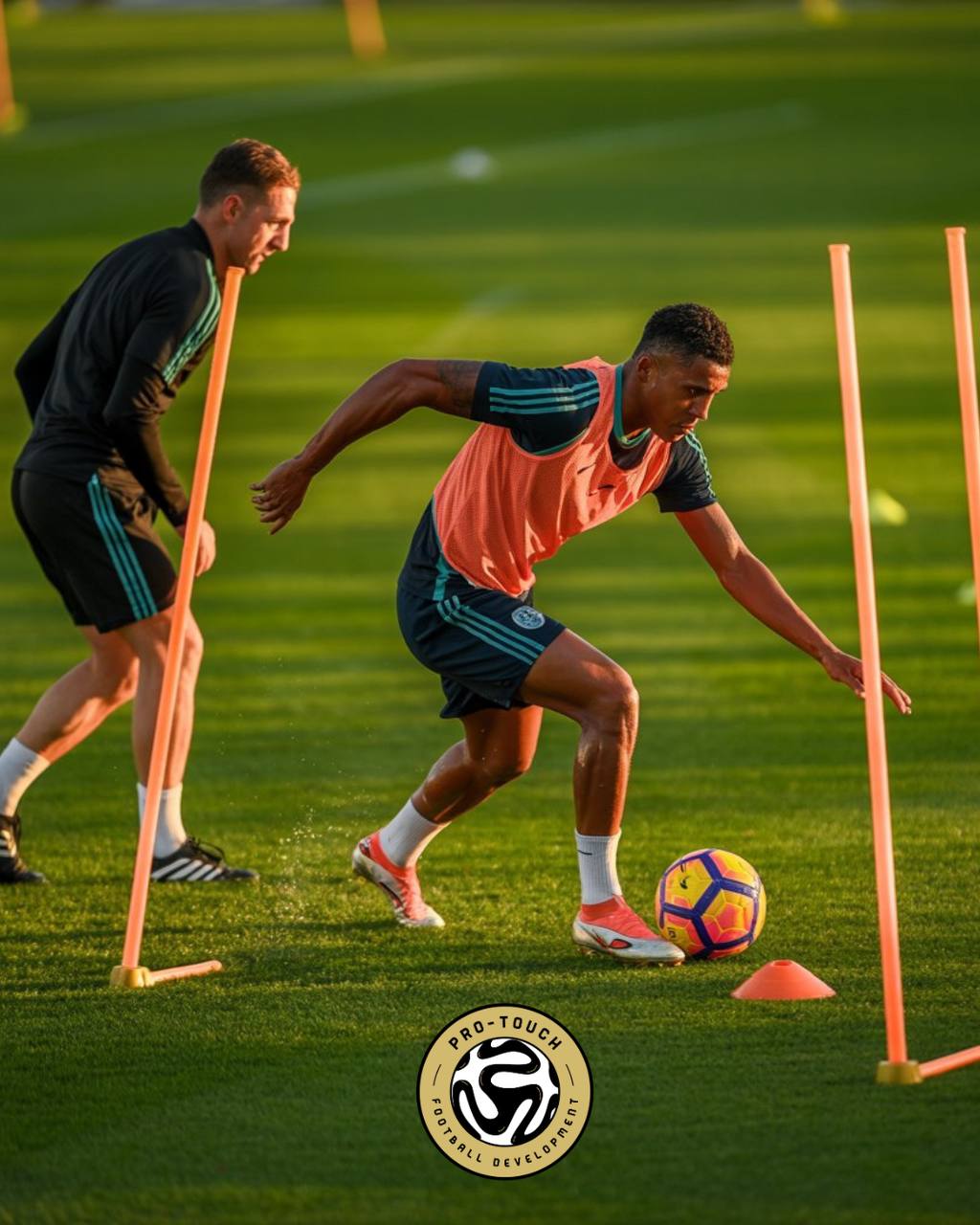
Transform Your Defensive Game with Professional Pressing Techniques
Are you looking to take your football defending to the next level? Whether you’re a youth player, amateur athlete, or aspiring professional, understanding the principles of defending is crucial for success on the pitch. In this comprehensive guide, we’ll break down the 4 key principles of pressing that will transform you into a complete defensive player.
What is Pressing in Football?
Pressing is a coordinated defensive strategy where players apply immediate pressure on opponents to win back possession quickly. Elite teams like Manchester City, Liverpool, and Bayern Munich use pressing as their foundation for defensive success. Through 1-to-1 football coaching, you can master these same principles that separate good defenders from great ones.
The 4 Principles of Defending: A Complete Pressing Framework
1. PRESSURE: Apply Immediate Pressure on the Ball
What is Pressure in Football?
Pressure is the first line of defense. When your opponent receives the ball, the nearest defender must close down the ball carrier quickly and with control. This immediate pressure forces mistakes, limits passing options, and wins possession in dangerous areas.
The closest player to the ball carrier must engage immediately. This is non-negotiable in modern football. Hesitation gives opponents time to scan, think, and execute their plan.
How to Apply Pressure Correctly:
- Sprint to close space but slow down in the final 2-3 yards
- Stay on your toes with knees bent
- Force the player toward the sideline or backward
- Cut off forward passing lanes with your body position
- Arrive with controlled aggression, not wild lunges
Why Pressure Matters: Without immediate pressure, opponents have time to pick passes, turn, and play forward. The best teams in the world win the ball back within 5 seconds of losing it by applying instant pressure that disrupts the opponent’s rhythm.
2. COVER: Provide Support Behind the Presser
What is Cover in Football Defense?
Cover is the safety net. While the first defender applies pressure, the second defender positions themselves at an angle 2-3 meters behind, ready to step in if the press is beaten. This second line of defense ensures the team doesn’t collapse if the first press fails.
Understanding the Cover Position: The covering player has a dual responsibility: support the presser while protecting the space behind. If the press is beaten, the covering player immediately becomes the new presser, while the original presser must recover quickly to provide the next layer of cover.
How to Provide Effective Cover:
- Position yourself 2-3 meters behind the first presser
- Angle your body to see both the ball and the space behind
- Stay connected to the first defender through communication
- Be ready to become the new presser within a split second
- Never stand directly behind – angle creates better coverage
Why Cover Matters: Individual pressing without cover is suicide. One clever turn, one sharp pass, and your entire defensive structure collapses. Cover ensures that aggressive pressing becomes a team strength rather than an individual gamble.
3. BALANCE: Protect the Opposite Side
What is Balance in Football Defending?
Balance prevents teams from exploiting the weak side. While players press the ball, the third defender covers the far post or opposite side of the pitch, protecting against switches of play. This principle stops intelligent opponents from simply playing around your press.
The Far Side is Always Under Threat: Modern football is about exploiting space. If your entire team shifts to press one side, savvy opponents will switch play to the unprotected area. Balance ensures you’re never vulnerable to these switches.
How to Maintain Defensive Balance:
- Always have a player aware of the back post and far side threats
- Don’t get drawn to the ball in groups – trust your teammates
- Scan constantly to see both ball and potential dangers
- Communicate loudly about weak-side movements
- Understand when to tuck in vs when to stay wide
Why Balance Matters: The best pressing teams don’t just win balls on one side – they control the entire pitch. Balance turns good pressing into elite pressing by eliminating easy escape routes for opponents.
4. COMPACTNESS: Squeeze Space as a Unit
What is Compactness in Football?
Compactness means keeping the team tight together, reducing space between defensive lines to 10-15 meters maximum. This collective movement limits passing options, forces mistakes, and creates opportunities to trap opponents in high-pressure zones.
Space is the Enemy: Football is a game of space management. The more space opponents have, the more time they have to think and execute. Compactness removes time and space, forcing rushed decisions and errors.
How to Maintain Compactness:
- Keep vertical distance between defense and midfield at 10-15 meters
- Push up as a unit when pressing high
- Drop together when defending deep
- Maintain horisontal compactness – don’t spread too wide
- Create “pressing traps” where opponents have nowhere to go
- Move collectively on the same triggers
Why Compactness Matters: Compactness is the difference between organised chaos and structured dominance. It allows teams to outnumber opponents in key areas, win second balls consistently, and maintain defensive shape even under pressure.
How the 4 Principles Work Together
These principles don’t exist in isolation – they’re interconnected layers of a defensive system:
Scenario: Opponent receives ball in midfield
- Pressure: Nearest midfielder sprints to close down (3 seconds)
- Cover: Second midfielder positions 3 meters behind at an angle
- Balance: Far-side winger tucks in to protect potential switch
- Compactness: Entire team pushes up 5-10 yards to compress space
This coordinated movement happens in seconds but requires extensive practice and tactical understanding.
Pressing Triggers: When to Activate the Press
Understanding when to press is as important as knowing how to press:
Primary Pressing Triggers:
- Poor first touch by opponent
- Back pass to weaker foot
- Player receiving with back to goal
- Ball played into tight space near touchline
- Opponent looking down at the ball
Avoid Pressing When:
- Opponent has clear forward passing options
- Your team is unbalanced or recovering
- Playing against significantly faster opponents in open space
- Late in games when protecting a lead
Common Pressing Mistakes and How to Fix Them
Mistake #1: Pressing as Individuals
Too many players press alone without support. The result? One pass beats the entire press.
Solution: Always press with at least two players coordinating movements.
Mistake #2: Pressing Too Slowly
Arriving 2 seconds late allows opponents to control the ball and find passing options.
Solution: Explosive first steps. The press starts the moment possession is lost.
Mistake #3: Poor Cover Positioning
Covering player stands directly behind the presser instead of at an angle.
Solution: Angle your cover position to see ball and space simultaneously.
Mistake #4: Losing Compactness
Defense drops deep while midfield presses high, creating massive gaps.
Solution: Rehearse pressing movements in training until the team moves as one unit.
Mistake #5: Pressing Everything
Constant high pressing leads to exhaustion and exploitable spaces.
Solution: Choose smart pressing triggers. Sometimes, dropping into shape is the right decision.
Benefits of Mastering Defensive Principles
✅ Win possession higher up the pitch – Create scoring opportunities from turnovers
✅ Improve tactical awareness – Read the game like professional defenders
✅ Increase confidence – Know exactly where to be and when
✅ Enhance team defending – Become a reliable defensive partner
✅ Stand out to coaches – Demonstrate advanced understanding of the game
✅ Reduce defensive errors – Organised pressing prevents individual mistakes
✅ Control game tempo – Dictate when opponents can play
Pressing in Different Formations
4-3-3 Pressing
- Front three apply pressure on back line
- Midfield three provide cover and balance
- Back four push up to maintain compactness
4-2-3-1 Pressing
- Striker forces ball to one side
- Attacking midfielders cover passing lanes
- Double pivot provides balance
3-5-2 Pressing
- Two strikers press center backs
- Wing-backs manage width while maintaining balance
- Three center backs provide defensive security
How 1-to-1 Football Coaching Accelerates Pressing Development
Personalised Training for Maximum Development
Individual football coaching allows players to:
- Master pressing principles at their own pace
- Develop tactical understanding through repetition
- Build confidence in defensive decision-making
- Practice position-specific pressing responsibilities
- Receive detailed feedback on positioning and timing
Why Private Training Works for Defensive Development
Group training often focuses on attackers. 1-to-1 coaching dedicates entire sessions to defensive excellence, ensuring defenders get the specialised attention they deserve.
Focus areas in individual sessions:
- Reading opponent body language
- Timing of press engagement
- Communication during pressing sequences
- Recovery runs after failed presses
- Game-specific scenario training
Training Progressions for Pressing Principles
Beginner Level (Building Foundation)
- Understand individual responsibilities
- Practice approach angles
- Learn when to engage vs contain
- Develop communication habits
Intermediate Level (Coordination)
- Two-player pressing combinations
- Cover angles and distances
- Reading pressing triggers
- Collective movement patterns
Advanced Level (Game Implementation)
- Full-team pressing coordination
- Counter-pressing after losing possession
- Pressing trap creation
- Adapting press to opponent strengths
Real-World Application: Professional Examples
Liverpool’s Gegenpressing
Jürgen Klopp’s teams excel at counter-pressing – winning the ball back immediately after losing it. They use all four principles simultaneously, overwhelming opponents with coordinated pressure.
Manchester City’s Positional Press
Pep Guardiola’s teams press from specific triggers, maintaining perfect compactness and balance. Their pressing rarely looks frantic because it’s so organised.
Bayern Munich’s High Line
Bayern pushes their defensive line high, creating compactness between defense and attack. This aggressive approach requires perfect execution of all four principles.
Age-Appropriate Pressing Development
Youth Players (8-12 years)
Focus on individual pressure application and basic cover concepts. Keep it simple: “press the ball fast” and “help your teammate.”
Teenagers (13-16 years)
Introduce balance and compactness. Players can understand more complex positioning and begin to read pressing triggers.
Advanced Players (17+ years)
Full implementation of coordinated pressing systems with position-specific responsibilities and game-model understanding.
Take Your Defending to the Next Level
Understanding the 4 principles of defending – Pressure, Cover, Balance, and Compactness – is essential for any player serious about improving their game. These aren’t just abstract concepts; they’re practical tools used by the best teams and players in the world.
Whether you’re a center back learning to organise a defensive line, a midfielder mastering when to press, or a forward becoming the first defender, these principles apply to every position on the pitch.
Ready to Master Pressing?
Book your first 1-to-1 pressing-focused session today and discover how personalised coaching can transform your defensive game. Our expert coaches use proven training methods, game-based scenarios, and individualised feedback to accelerate your development.
Frequently Asked Questions About Football Pressing
Q: What age should players start learning pressing principles?
A: Players as young as 8-9 can begin learning basic pressing concepts. We adapt complexity based on age and ability.
Q: How long does it take to master defensive pressing?
A: Individual understanding develops within weeks, but team coordination takes months of consistent practice. 1-to-1 coaching accelerates individual development significantly.
Q: Can pressing principles help attackers too?
A: Absolutely! Modern forwards are the first line of defense. Understanding pressing makes you a complete player regardless of position.
Q: Is pressing only for professional teams?
A: No! Players at all levels benefit from organised pressing. Even youth teams can implement simplified pressing principles effectively.
Q: What’s the difference between pressing and chasing the ball?
A: Pressing is coordinated and purposeful with clear triggers. Chasing is reactive and unorganised, often creating more problems than solutions.
Q: How does fitness affect pressing ability?
A: High-intensity pressing requires excellent fitness, but smart pressing with proper triggers is sustainable even for amateur players.
Conclusion: Pressing as a Complete Defensive System
The four principles – Pressure, Cover, Balance, and Compactness – transform individual defenders into cohesive defensive units. Master these principles, and you’ll understand why the best teams in the world prioritise defensive organisation as much as attacking flair.
Remember:
- Pressure forces mistakes
- Cover provides security
- Balance prevents exploitation
- Compactness removes space
Together, these principles create a defensive system that’s greater than the sum of its parts.
Pro Touch Football
Ready to dominate defensively? Contact us today to book your personalised training session and start your journey to becoming a complete defender.
Last Updated: November 2025