An effective football shooting drill gives a player a clear technical focus, enough repetitions to build a habit, and a realistic enough picture to carry into a match. Drills that only ask a child to strike a ball at an empty net teach technique but not decision-making. The best sessions layer in a first touch, a defender, or a choice, as a player’s age and ability allow.
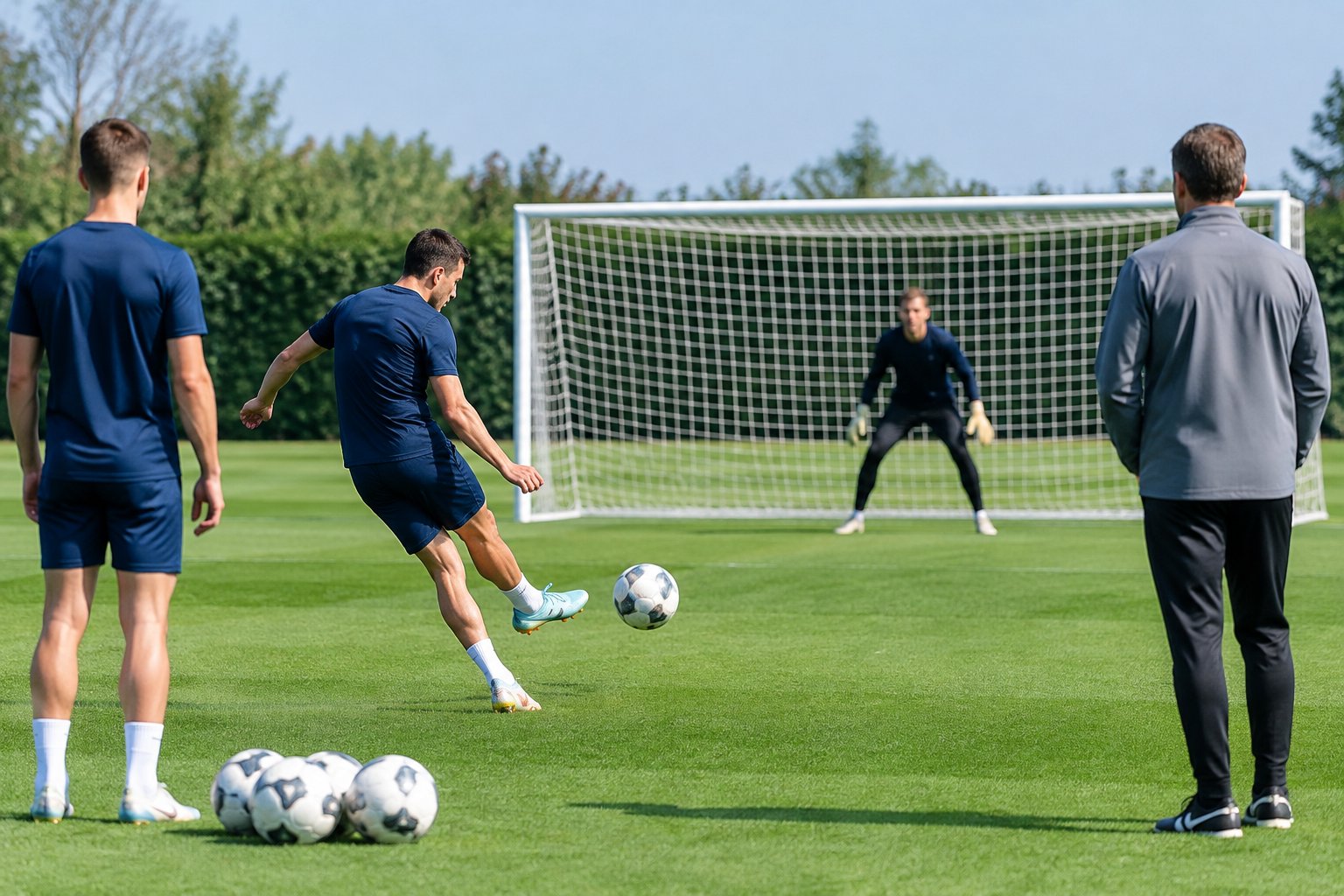
Parents and coaches often ask the same question: how do you turn a raw shot into a reliable finish? The answer sits in the structure of practice rather than in natural talent alone. A six-year-old needs something different from a 15-year-old preparing for a trial, and the drills below are grouped so that families and coaches can pick the right starting point and progress from there over weeks and months.
Key Takeaways
Shooting drills work best when they match a player’s age, confidence and current technical level.
Progress from static technique work towards drills that include a first touch, a defender or a decision.
Control and enjoyment should come before power, especially for players under 12.
Beginner Drills for Accurate Striking
Early shooting technique should focus on contact, body shape and placement rather than power. Mini goals, cone gates and simple targets help young players see immediate feedback on where the ball goes, which builds the habit of aiming before striking.
Aim Through Cone Gates
Set up two cones around a metre apart, roughly 8 to 10 yards from the shooter, with a mini goal or a marked target behind them.
Setup: two cones as a gate, a ball, a mini goal or two flat markers as the target.
How to run it: the player strikes the ball through the gate and into the target, resetting after each attempt.
Coaching cues: plant foot alongside the ball, eyes on the target before striking, lock the ankle on contact.
Variation: move the gate wider for younger beginners, narrower for players finding it easy.
Common mistake: leaning back on contact, which sends the ball high rather than along the ground.
Pass, Set and Shoot
A coach or parent passes the ball in, and the player takes one touch to set it before striking at goal.
Setup: one feeder, one shooter, a goal or mini goal 10 yards away.
How to run it: feeder rolls or passes the ball to the shooter, who controls then shoots within two touches.
Coaching cues: first touch away from the body, head steady, strike through the middle of the ball.
Variation: increase the pace of the feed for older players, slow it down for beginners still learning the setup touch.
Common mistake: rushing the first touch so the ball sits too close to the feet.
Shoot with Both Feet
Alternating feet in practice builds confidence that carries into matches, where the ball rarely arrives on the favoured side.
Setup: a line of five balls, a goal or mini goal, cones marking a shooting zone.
How to run it: the player shoots alternate balls with the left and right foot, aiming for the same target each time.
Coaching cues: square the hips to the target, strike through the laces for power or the inside of the foot for placement.
Variation: reduce to three balls for younger children, add a time limit for older ones.
Common mistake: favouring the stronger foot by shuffling the body to avoid using the weaker one.
Drills for Shooting After a First Touch
A clean first touch sets up every good finish, so these drills combine receiving the ball with an immediate shooting decision. Players practise controlling a pass under light pressure before striking, which mirrors how most goals are actually scored.
Receive, Turn and Finish
The player receives the ball with their back to goal, turns, and shoots in one controlled movement.
Setup: a feeder behind the player, a goal in front, a cone marking the starting position.
How to run it: feeder passes to the player’s feet; the player takes a touch to turn and shoots within two to three touches.
Coaching cues: check over the shoulder before the ball arrives, open the body on the turn, keep the shot low.
Variation: add a passive defender behind the player for older groups; allow an extra touch for beginners.
Common mistake: turning too slowly, which gives an imaginary defender time to recover.
Dribble Around a Cone and Shoot
This drill links close control to a finish, which is useful once a player is comfortable striking a stationary or passed ball.
Setup: a cone 12 to 15 yards from goal, a ball, a shooting target.
How to run it: the player dribbles towards the cone, changes direction around it, and shoots within two touches of finishing the turn.
Coaching cues: small touches approaching the cone, head up before shooting, strike with the laces for a firm finish.
Variation: add a second cone for a sharper change of direction; remove the cone and use a simple straight run for younger players.
Common mistake: slowing down too much before the shot, which gives defenders time to close in during a match.
Drills for Finishing Under Pressure
Finishing under pressure asks a player to combine technique with decision-making while a defender closes them down. These drills are best introduced once a player can already strike the ball accurately and comfortably with both feet, since the added pressure exposes weak habits quickly.
Beat a Defender in a 1v1
A classic finishing scenario that tests close control, composure and decision-making against a defender’s challenge.
Setup: one attacker, one defender, a goal, a starting zone around 15 yards out.
How to run it: attacker starts with the ball and tries to beat the defender and score; defender starts passive, then full-paced.
Coaching cues: change of pace to create separation, shoulder drop or body feint to unbalance the defender, shoot early if a gap opens.
Variation: give the attacker two touches maximum for a sharper version; allow unlimited touches for beginners still learning defending skills themselves.
Common mistake: taking too many touches, which allows the defender to recover position.
Choose to Pass or Shoot in a 2v1
This drill introduces decision-making under pressure, where the attacking pair must read the defender’s position before acting.
Setup: two attackers, one defender, a goal, a starting line around 18 yards out.
How to run it: attackers combine to beat the defender, choosing whether to pass or shoot depending on the space available.
Coaching cues: scan before receiving, play simple passes, shoot early if the goalkeeper or defender is out of position.
Variation: add a time limit to speed up decisions; remove the defender initially so players focus purely on combination play.
Common mistake: forcing a shot when a simple pass would create a clearer chance.
Finish in a Small-Sided Game
Small-sided games put shooting technique into its most realistic context, where players must create and take chances amid genuine match pressure.
Setup: four vs four or five vs five, two small goals, a pitch around 30 by 20 yards.
How to run it: play normally, with a coach calling out reminders about shooting early and using both feet.
Coaching cues: shoot on sight when in range, keep shots low and placed, support the practice with reminders rather than constant stoppages.
Variation: reduce to three vs three for more touches per player; add goalkeepers for older groups preparing for 11-a-side football.
Common mistake: overplaying in the final third instead of shooting when the chance is there.
How Should You Adapt Shooting Practice by Age and Ability?
Shooting practice should shift from playful repetition in early childhood towards structured, pressure-based finishing as players approach their mid-teens. The right balance depends on a player’s technical foundation as much as their age, so these ranges are a guide rather than a strict rule.
Keep It Playful for Ages 6–9
Children at this age respond best to short, varied activities with lots of shots and minimal standing around. Competitions like “first to five goals” or shooting at targets painted on mini goals keep energy high without overloading technical instruction.
Add Movement and Choices for Ages 10–12
Once basic technique is established, drills can introduce a first touch, a simple decision, or a passive defender. Players at this stage benefit from feedback on body shape and placement rather than purely on power.
Increase Match Pressure for Ages 13–16
Older players can handle full-paced 1v1s, 2v1s and small-sided games with goalkeepers. Coaching at this stage often moves towards finishing under realistic pressure, since technical basics should already be in place for most players preparing for more competitive football.
Building Confidence One Finish at a Time
Confidence in front of goal builds through repetition, encouragement and realistic challenge, not through chasing power or perfection in a single session. A player who misses five shots and scores on the sixth has learned more about composure than one who only ever shoots into an empty net from a standing start.
Coaches and parents play a part here too. Calm, specific feedback (a reminder about the planting foot, a note on where the shot went) helps more than generic praise or criticism. Celebrating effort and improvement, not just goals scored, keeps younger players enjoying the process.
Progress in finishing rarely moves in a straight line. A player might strike the ball cleanly one week and regress the next as they try a new technique or face a tougher defender. Patient, structured practice over time, rather than a single breakthrough session, is what tends to produce reliable improvement.
For families around Mill Hill and North West London looking for coaching built around a child’s specific needs, Pro Touch Football runs one-to-one and small-group sessions at Powerleague Mill Hill covering shooting, first touch, 1v1 play and match confidence. Enquiries can be made through the contact page or by phone or WhatsApp on +44 7845 286437.
Frequently Asked Questions
What are good football shooting drills for beginners?
Beginners benefit most from drills that isolate technique, such as aiming through cone gates or taking a simple pass, set touch and shot. These focus on clean contact and placement rather than power or decision-making. Mini goals and short distances of around 8 to 10 yards keep success rates high and confidence building.
How can a 10-year-old practise shooting with both feet?
A simple drill is alternating shots with the left and right foot from a line of balls placed 10 yards from a mini goal. Keeping the target the same for both feet helps a 10-year-old notice differences in accuracy and work on the weaker side specifically. Three to five balls per foot is usually enough to hold focus at this age.
Which shooting drills work for U8 players?
U8 players respond well to short, high-repetition activities like aiming through cone gates or simple pass-and-shoot drills with a feeder. Keeping goals small and distances short, around 6 to 8 yards, lets players experience success often, which supports enjoyment and confidence at this age. Long explanations or complex setups tend to lose attention quickly.
What are some good three-player shooting drills?
A 2v1 drill, where two attackers combine to beat one defender and choose whether to pass or shoot, works well with three players. It introduces decision-making alongside technique, since the attacking pair must read the defender’s position before acting. A receive-turn-and-finish drill with one feeder and one passive defender also suits a group of three.
How can U12 players practise finishing under pressure?
U12 players can start introducing a passive or semi-active defender into 1v1 or 2v1 finishing drills once their basic technique is secure. Small-sided games with two small goals also create realistic pressure without overwhelming players who are still developing decision-making skills. Coaches often keep the defending light at this age so players focus on composure rather than simply avoiding a tackle.