A player loses the ball ten yards from the halfway line. In that moment, three things could happen: they chase the ball alone, they stand and watch, or the whole team reacts together. Only one of those gives a young side a real chance of winning possession back before the opposition can attack. Counter pressing for youth teams is about building that shared reaction, so a loss of possession becomes an opportunity rather than a crisis.
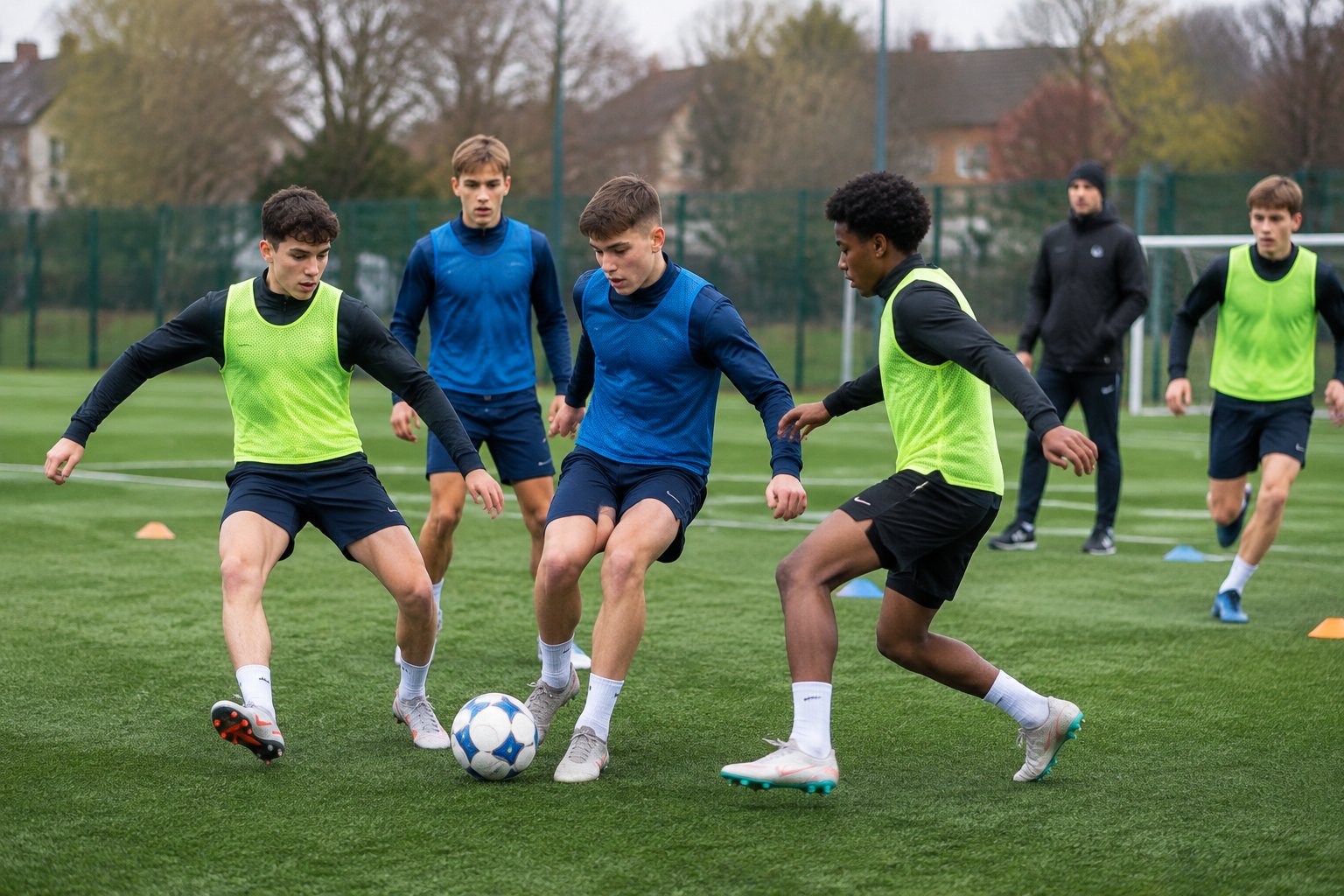
At Pro Touch Football, we coach players across North West London to make quicker, calmer decisions in exactly this kind of moment, whether that’s closing down the ball carrier, covering the nearest passing option, or recognising when it’s time to drop off and reset. Young players develop a reliable counter-pressing reaction fastest through short, repeatable games that reward winning the ball back within a few seconds, not through lectures on positioning. If you’d like a coach to work on this with your child individually or in a small group, you can get in touch with us to ask about sessions at our Mill Hill venue or elsewhere in the area.
Key Takeaways
- Counter-pressing works best as a team habit built through small-sided games, not a single player’s job.
- Age-appropriate coaching matters: younger players focus on reacting quickly, older players learn triggers and shape.
- Knowing when to stop pressing and drop into defensive shape is as important as the press itself.
What Is Counter-Pressing After Losing the Ball?
Counter-pressing is the immediate, collective effort by the nearest players to win the ball back the moment their team loses it, instead of retreating to reorganise. Rather than waiting for the opposition to build an attack, players closest to the ball close down space straight away, while team-mates cover the short passing options. This idea sits at the heart of what’s sometimes called gegenpressing, a German term that became widely known through its use by top-level coaches, though the principle applies just as well to an U12 game on a Saturday morning as it does at the top of the sport.
Counter-pressing is one part of a wider picture called defensive transition, the short period right after possession changes hands when both teams are briefly disorganised. Getting this moment right, and regaining possession before the opponent can settle, is often more valuable than any amount of pressing once the other team has already built an attack.
How Is It Different from a High Press?
A high press is a sustained defensive structure where a team pushes up the pitch to force mistakes over a longer passage of play. Counter-pressing is a short, sharp reaction that only happens straight after losing the ball, usually lasting a matter of seconds rather than minutes. A team can counter-press without playing a high press at all, and plenty of youth sides do exactly that: they sit in a mid-block for most of the game but react fast the instant they’re dispossessed.
Why Do the First Few Seconds Matter?
The first few seconds after losing the ball are when the opponent is least organised and most likely to give it straight back. FIFA’s elite coaching resources describe how reacting quickly and pressing the ball carrier as soon as possession is lost significantly boosts a team’s chances of regaining possession before the opposition can spring a counter-attack. Several coaching guides describe this as a five-second window, though the exact number matters less than players sharing the same instinct to react together.
What Should Players Do When Possession Is Lost?
The player closest to the ball closes it down immediately, while others cover passing lanes and the rest of the team holds its shape behind them. This isn’t about every player sprinting at the ball carrier. It’s a coordinated picture where roles are clear, even if they’re decided in a split second rather than shouted across the pitch.
Who Presses the Ball and Who Covers the Pass?
The nearest player to the ball applies pressure, cutting down the time and space the opponent has to think. The next closest players don’t join the chase; they cover the short pass options so the opponent can’t simply play around the first press. One coaching guide describes this clearly: the nearest player attacks the new ball carrier while team-mates close the short escape routes and the deeper unit protects the space behind them. Getting young players to understand these separate jobs, rather than everyone converging on the ball, is one of the first breakthroughs in learning to defend as a team.
Which Pressing Triggers Should Young Players Recognise?
A pressing trigger is a specific moment that tells a player it’s the right time to press, such as a heavy touch, a square pass, or the ball reaching a player who’s weaker on the ball. Learning to spot these cues stops pressing from becoming random chasing. We’ve written in more detail about the pressing triggers that separate organised teams from teams that just run hard, and the same principles apply directly to the moment after losing the ball.
When Should the Team Drop into Shape?
If the ball isn’t won back quickly, the team needs to stop pressing and drop into its defensive shape instead of continuing to chase. This decision matters as much as the press itself. A team that presses for too long without winning the ball leaves gaps in behind, and teaching young players to recognise that moment, usually after two or three seconds of unsuccessful pressure, prevents the press from turning into a liability.
Which Drills Help Youth Teams Practise the Reaction?
Small-sided games with a clear rule for winning the ball back teach this reaction far better than isolated technical drills. Game-based learning and conditioned games reliably improve tactical understanding and decision-making in youth football more than drills without opponents, which is exactly the kind of reflex counter-pressing asks for, according to coaching guidance aimed at U13 and U14 players. The progression below moves from simple reaction games to something closer to a match situation.
Start with a Steal-Back Game
In a small area, split players into pairs or small groups and give one side the ball. The moment it’s lost, whoever is nearest must close down the new ball carrier immediately, with no other instruction beyond “win it back fast.” This strips the idea down to its simplest form: react, don’t wait.
Add an Escape Pass to a 5v2 Rondo
A 5v2 rondo, where five players keep the ball from two defenders in the middle, is a familiar possession game for most youth coaches. Add a rule that the two defenders in the middle, once they win the ball, have a set number of seconds to find an escape pass before possession resets. This forces the five outfield players to react instantly when they lose the ball, closing down the escape route rather than standing off.
Progress to Small-Sided Games with a Recovery Bonus
In a 4v4 or similar small-sided game, award an extra point or a short possession bonus whenever a team wins the ball back within a set number of seconds of losing it. Several coaching resources use this exact structure; one describes a 4v4 game where losing the ball gives a team six seconds to win it back, or possession resets to the opposition, as outlined in this approach to coaching transitions in youth football. Others use a similar five-second rule in 6v6 games for slightly older age groups. The bonus makes the reward for a fast reaction obvious to every player on the pitch, not just the one coaching it.
How Can Coaching Match a Player’s Age and Ability?
Counter-pressing should be introduced gradually, starting with simple reactions at younger ages and building towards reading triggers and protecting space as players get older. Asking a seven-year-old to “recognise a pressing trigger” isn’t realistic; asking a fourteen-year-old to simply “chase the ball” wastes an opportunity to build genuine understanding.
Ages 6–10: React and Try to Win It Back
At this age, the aim is simple: when you lose the ball, try to win it back straight away. Coaching points stay short and physical, focused on the first touch after losing possession and closing down space quickly, without expecting positional discipline or coordinated roles.
Ages 11–13: Press with Nearby Team-Mates
Players this age can start linking up with one or two nearby team-mates rather than reacting alone. The focus shifts to pressing the ball while a team-mate covers the pass, building the basic pairs and triangles that underpin a coordinated press later on.
Ages 14–16: Read the Trigger and Protect Space Behind
Older players can learn to recognise specific pressing triggers and understand when the team should stop pressing and drop into shape instead. This is also the stage where decision-making under match pressure, not just reaction speed, becomes the main coaching focus.
How Pro Touch Football Builds Match-Ready Habits
Pro Touch Football develops the individual technique and game understanding that make a fast, controlled reaction possible, through one-to-one coaching and small-group sessions at our Mill Hill venue and across North West London. Counter-pressing depends on players who can close down under control, read the game a half-second quicker, and recover their shape without panicking, and those qualities are built over many sessions, not a single drill.
Use Individual Coaching to Improve the First Reaction
Our one-to-one sessions let a coach work directly on a player’s first touch, body shape and decision-making the moment possession is lost, tailored to their position and current level. A central midfielder learning to react to a misplaced pass needs different cues to a full-back recovering after being dribbled past, and individual coaching allows that detail. Families interested in this kind of focused work can look at our coaching packages to see what’s available.
Use Small-Group Play to Connect Technique and Team Decisions
Small-group development sessions bring players together for small-sided games where the reaction to losing the ball has to involve team-mates, not just the individual. This is where the pressing and covering roles described earlier in this article start to feel natural rather than instructed. If you’re unsure which format suits your child, our contact page is the quickest way to ask about the right programme.
Build a Quick Reaction, Not a Habit of Chasing
Counter-pressing gives young players a clear job the instant they lose the ball: close down, cover, or recover, depending on where they stand. The skill isn’t intensity alone; it’s knowing which of those three jobs is theirs in that moment, and when to stop pressing and drop into shape instead.
FIFA’s technical study group found that winning teams at the 2026 World Cup regained the ball on average four seconds faster than losing teams, a reminder that the first reaction after losing possession carries weight at every level of the game. Building that reaction in young players takes patient repetition through small-sided games and age-appropriate coaching, starting simple and adding detail as players mature. Progress in this area tends to show up gradually, through calmer decisions and quicker recoveries in matches, rather than overnight.
Frequently Asked Questions
What’s the difference between pressing and counter-pressing?
Pressing is a sustained team structure, often played high up the pitch, designed to force mistakes over a longer period of possession. Counter-pressing is a short, immediate reaction that only happens in the seconds right after losing the ball, aimed at winning it back before the opponent can organise an attack.
At what age can children learn counter-pressing?
Children can start learning the basic idea, trying to win the ball back quickly after losing it, from around age 10, though simpler reaction games work well with younger players too. Recognising specific pressing triggers and understanding when to drop into shape is better suited to players aged 14 and above, once their game understanding has developed further.
What are some good counter-pressing drills for youth football?
Effective drills include a simple steal-back reaction game, a 5v2 rondo with an added escape-pass rule for the defenders, and small-sided games with a recovery bonus for winning the ball back within a set number of seconds. Progressing from simple to match-like practices helps players transfer the reaction into real games rather than just drills.
How long should a youth team try to win the ball back before dropping off?
Many coaching resources use a window of around five to six seconds before a team should stop pressing and recover its defensive shape. The exact number matters less than the team sharing a consistent understanding of when to stop, since pressing for too long without winning the ball leaves space open behind the press.
Can one-to-one coaching help a player improve their counter-pressing?
One-to-one coaching can sharpen the individual decisions that sit underneath a good counter-press, such as closing down under control, reading the first pass, and recovering position quickly. Pro Touch Football’s individual sessions work on exactly this kind of detail, alongside small-group sessions where players practise the team side of the reaction together.