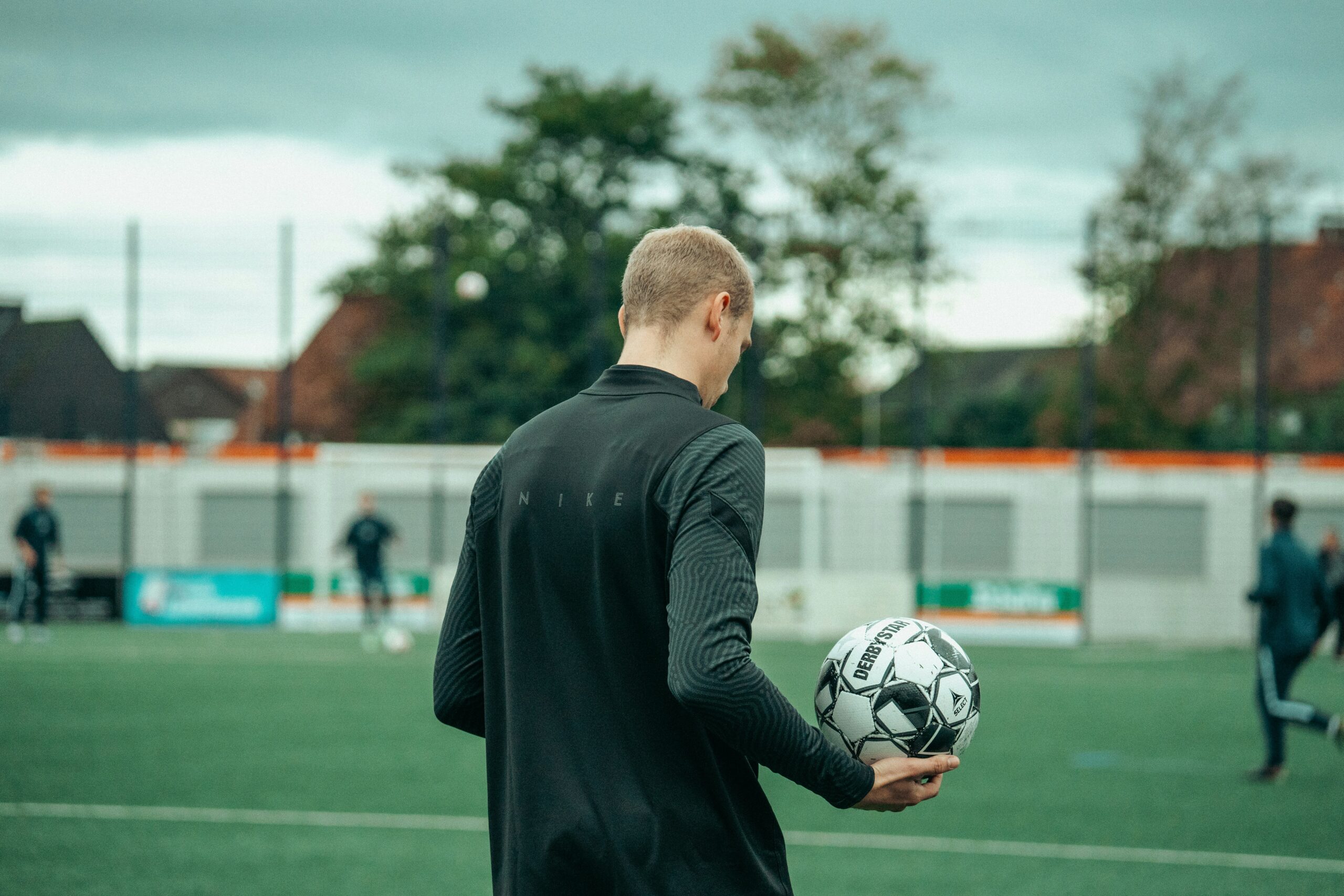
Discover the science-based injury prevention methods that keep elite footballers on the pitch and performing at their peak
When Virgil van Dijk suffered his ACL injury in 2020, Liverpool’s entire season changed. When Kevin De Bruyne battles recurring muscle strains, Manchester City’s creativity diminishes. When Harry Kane manages his ankle issues, Tottenham’s goal output suffers. These examples highlight a crucial truth: in modern football, staying injury-free is just as important as developing technical skills.
Premier League players aren’t just more skilled than amateur footballers – they’re also more resilient. The same players who can perform at maximum intensity for 90 minutes, week after week, for entire seasons, do so because they follow systematic injury prevention protocols that most amateur players never see.
Understanding and implementing these professional-level injury prevention strategies can be the difference between a season-ending injury and a career-long love affair with the beautiful game.
The Premier League Injury Landscape
Recent Premier League injury data reveals patterns that every footballer should understand:
Most Common Injuries:
- Hamstring strains: 23% of all injuries, averaging 18 days out
- Ankle sprains: 16% of injuries, typically 12-15 days recovery
- Knee injuries: 14% of injuries, ranging from 3 days to 9+ months
- Groin strains: 12% of injuries, usually 10-14 days out
- Muscle fatigue injuries: 11% of injuries, often preventable
Peak Injury Periods:
- Pre-season: Poor conditioning meets high intensity
- October-November: Fixture congestion begins
- January-February: Winter conditions and fatigue accumulation
- Late season: Accumulated fatigue and crucial matches
These statistics aren’t random – they reflect specific physical demands and risk factors that professional injury prevention programs are designed to address.
The Science of Professional Injury Prevention
Premier League clubs employ teams of sports scientists, physiotherapists, and conditioning coaches whose sole focus is keeping players healthy. Their methods are based on cutting-edge research and real-world testing with elite athletes.
Load Management: The Foundation
Training Load Monitoring: Professional clubs track every aspect of player exertion using GPS data, heart rate monitoring, and subjective wellness scores. This data helps identify when players are at increased injury risk.
Progressive Overload Principles: Gradual increases in training intensity that allow adaptation without overloading tissues. Premier League players don’t suddenly jump from 0% to 100% – they follow carefully planned progressions.
Recovery Protocols: Elite players spend as much time on recovery as they do on training. This includes sleep optimisation, nutrition timing, and active recovery methods.
Movement Quality: The Prevention Key
Functional Movement Screening: Professional clubs assess how players move before injuries occur. Poor movement patterns are corrected before they become a problems.
Neuromuscular Training: Exercises that improve how the brain communicates with muscles, reducing injury risk by improving coordination and reaction times.
Proprioceptive Development: Training that improves body awareness and balance, crucial for preventing ankle and knee injuries.
Premier League Warm-Up Secrets
The warm-up routines used by Premier League teams are far more sophisticated than jogging around the pitch. They’re designed to prepare the body for the specific demands of football while reducing injury risk.
The FIFA 11+ Protocol
Many Premier League teams use variations of the FIFA 11+ warm-up, which has been scientifically proven to reduce injury rates by up to 30%.
Phase 1: General Warm-Up (8 minutes)
- Straight ahead running: Slow to moderate pace
- Hip out/Hip in: Lateral movements with hip circles
- Circle partner: Running in circles with direction changes
- Shoulder contact: Light contact while jogging
- Quick forwards and backwards: Acceleration and deceleration
Phase 2: Strength, Plyometrics, Balance (10 minutes)
- Bench/Nordic: Eccentric hamstring strengthening
- Sideways bench: Lateral core stability
- Bench lift: Single-leg balance challenges
- Jumping: Plyometric exercises with proper landing
- Single-leg stance: Balance challenges with ball skills
Phase 3: Running Exercises (2 minutes)
- High-speed running: 75-80% maximum effort
- Bounding: Explosive forward movements
- Plant and cut: Direction changes at speed
Dynamic Stretching Protocol
Premier League players never do static stretching before training or matches. Instead, they use dynamic movements that prepare muscles for activity:
Lower Body Dynamic Sequence:
- Leg swings (forward/back and side to side)
- Walking lunges with rotation
- High knees and butt kicks
- Carioca (grapevine) steps
- A-skips and B-skips
Upper Body Activation:
- Arm circles and crosses
- Torso twists
- Shoulder rolls
- Neck rotations
Strength Training for Injury Prevention
Professional footballers don’t lift weights to look good – they lift to stay healthy. Premier League strength programs focus on functional movements that directly translate to injury prevention.
The Big Four Movement Patterns
1. Squatting Movements
- Goblet squats: Perfect for beginners
- Single-leg squats: Unilateral strength and stability
- Jump squats: Power development with landing mechanics
Injury Prevention Benefits: Stronger quadriceps and glutes protect knees and ankles during landing and cutting movements.
2. Hinge Movements
- Romanian deadlifts: Posterior chain strengthening
- Single-leg deadlifts: Unilateral strength and balance
- Glute bridges: Hip activation and strength
Injury Prevention Benefits: Strong hamstrings and glutes prevent muscle imbalances that cause strains and lower back pain.
3. Pushing Movements
- Push-ups: Upper body strength and stability
- Overhead press: Shoulder stability and strength
- Single-arm variations: Unilateral strength and core stability
Injury Prevention Benefits: Shoulder stability prevents upper body injuries during contact and falling.
4. Pulling Movements
- Rows: Posterior chain balance
- Pull-ups/chin-ups: Upper body strength
- Face pulls: Rear deltoid and upper back strength
Injury Prevention Benefits: Balanced upper body strength prevents postural issues and shoulder impingement.
Core Stability: The Foundation
Premier League players spend significant time on core training, but not traditional sit-ups. They focus on functional core stability that translates to football performance.
Anti-Extension Exercises:
- Planks and variations
- Dead bugs
- Ab wheel rollouts
Anti-Lateral Flexion:
- Side planks
- Pallof press
- Suitcase carries
Anti-Rotation:
- Bird dogs
- Single-arm/single-leg exercises
- Rotational resistance exercises
The Recovery Revolution
Professional players understand that recovery is when adaptation happens. Without proper recovery, training becomes counterproductive and injury risk increases.
Sleep Optimization
Premier League players treat sleep as seriously as training:
- 8-9 hours per night minimum
- Consistent sleep schedule even on off days
- Sleep environment optimization: Cool, dark, quiet rooms
- Pre-sleep routines that promote relaxation
Nutrition for Recovery
Post-Training Nutrition Window:
- Protein within 30 minutes of training
- Carbohydrate replenishment for glycogen stores
- Hydration monitoring and replacement
- Anti-inflammatory foods to reduce tissue damage
Daily Nutrition Principles:
- Adequate protein for tissue repair (1.6-2.2g per kg body weight)
- Sufficient carbohydrates for energy (5-7g per kg body weight)
- Healthy fats for hormone production and inflammation control
- Micronutrient density for optimal function
Active Recovery Methods
Low-Intensity Movement:
- Light swimming or cycling
- Yoga or stretching sessions
- Walking or easy jogging
- Foam rolling and self-massage
Professional Recovery Techniques:
- Massage therapy
- Contrast showers (hot/cold)
- Compression garments
- Meditation and relaxation techniques
Injury Prevention Periodization
Premier League clubs don’t use the same injury prevention program year-round. They periodise their approach based on the demands of different seasons and phases.
Pre-Season Focus
- Gradual load progression: Building fitness slowly
- Movement quality emphasis: Correcting poor patterns
- Strength foundation: Building resilience for the season
- Injury screening: Identifying and addressing weaknesses
In-Season Maintenance
- Load monitoring: Preventing overuse injuries
- Recovery emphasis: Managing fatigue accumulation
- Maintenance strength: Keeping strength levels up
- Injury prevention routine: Consistent daily protocols
Off-Season Recovery
- Complete rest phase: Mental and physical recovery
- Rehabilitation focus: Addressing accumulated damage
- Strength rebuilding: Preparing for next season
- Movement retraining: Improving efficiency and reducing risk
Position-Specific Injury Risks
Different positions face different injury risks, requiring tailored prevention strategies:
Goalkeepers
Common Injuries: Shoulder impingement, lower back pain, finger injuries Prevention Focus: Shoulder stability, core strength, hand/wrist conditioning
Defenders
Common Injuries: Hamstring strains, ankle sprains, head injuries Prevention Focus: Posterior chain strength, ankle stability, heading technique
Midfielders
Common Injuries: Groin strains, fatigue-related injuries, ankle sprains Prevention Focus: Hip stability, endurance conditioning, change of direction training
Forwards
Common Injuries: Hamstring strains, knee injuries, ankle sprains Prevention Focus: Sprint mechanics, landing technique, acceleration training
The Mental Component of Injury Prevention
Physical preparation is only part of injury prevention. Mental factors play a crucial role in staying healthy:
Stress Management: High stress levels increase injury risk by affecting recovery and decision-making.
Sleep and Recovery: Mental fatigue affects physical performance and increases injury susceptibility.
Confidence and Fear: Players recovering from injuries need mental strategies to return to full performance.
Decision-Making: Better on-field decisions reduce exposure to dangerous situations.
Technology in Injury Prevention
Premier League clubs use cutting-edge technology to prevent injuries:
GPS Monitoring: Tracking distance, speed, and acceleration to manage load Heart Rate Variability: Measuring recovery status and readiness to train Biomechanical Analysis: Identifying movement patterns that increase injury risk Injury Prediction Models: Using data to identify players at higher risk
Building Your Injury Prevention Program
Creating an effective injury prevention program requires systematic approach:
Step 1: Assessment
- Movement quality screening
- Strength testing
- Injury history analysis
- Position-specific risk evaluation
Step 2: Foundation Building
- Dynamic warm-up routine
- Strength training program
- Recovery protocols
- Nutrition optimization
Step 3: Implementation
- Consistent daily routines
- Progressive overload
- Load monitoring
- Regular reassessment
Step 4: Adaptation
- Seasonal adjustments
- Individual modifications
- Continuous improvement
- Professional guidance
The Cost of Ignoring Injury Prevention
Amateur players often skip injury prevention until it’s too late:
Direct Costs: Medical bills, rehabilitation, lost playing time Indirect Costs: Reduced performance, fear of re-injury, long-term health issues Opportunity Costs: Missed training, competitions, and development chances
Prevention is always more effective and less expensive than treatment.
Professional-Level Injury Prevention for Every Player
The injury prevention methods used by Premier League players aren’t exclusive to elite athletes. The same principles that keep professional footballers healthy and performing at their peak can be adapted for players at every level.
The difference between amateur and professional injury prevention isn’t access to expensive equipment or treatments – it’s having systematic, science-based programs that address the real risk factors that cause football injuries.
Most amateur players approach injury prevention reactively, only focusing on it after getting injured. Professional players approach it proactively, making injury prevention a cornerstone of their daily training routine.
The key to staying injury-free is implementing professional-level prevention strategies before problems occur.
Generic fitness programs can’t address the specific injury risks that football presents. The sport’s unique demands – explosive movements, direction changes, contact, and high-intensity intervals – require specialized conditioning that prepares your body for these exact stresses.
Pro Touch Football’s fitness programs are built around the same injury prevention principles used by Premier League clubs. Our systematic approach addresses movement quality, strength development, recovery optimisation, and load management – giving you the tools to stay healthy and perform at your best.
Our expert coaches understand that injury prevention isn’t just about avoiding setbacks – it’s about building resilience that allows you to train harder, play longer, and develop faster than players who are constantly battling injuries.
Ready to train with the same injury prevention focus as Premier League professionals?
Pro Touch Football’s comprehensive fitness programs combine cutting-edge injury prevention science with practical training methods that keep you on the pitch and performing at your peak.
Whether you’re looking to prevent recurring injuries, build resilience for competitive play, or simply want to train smarter and safer, our evidence-based programs provide the systematic approach that elite-level injury prevention requires.
Contact Pro Touch Football today to learn about our injury prevention and fitness programs – and start training with the same commitment to staying healthy as the Premier League professionals.
Don’t wait for an injury to side-line your football dreams. Start your professional-level injury prevention program today.